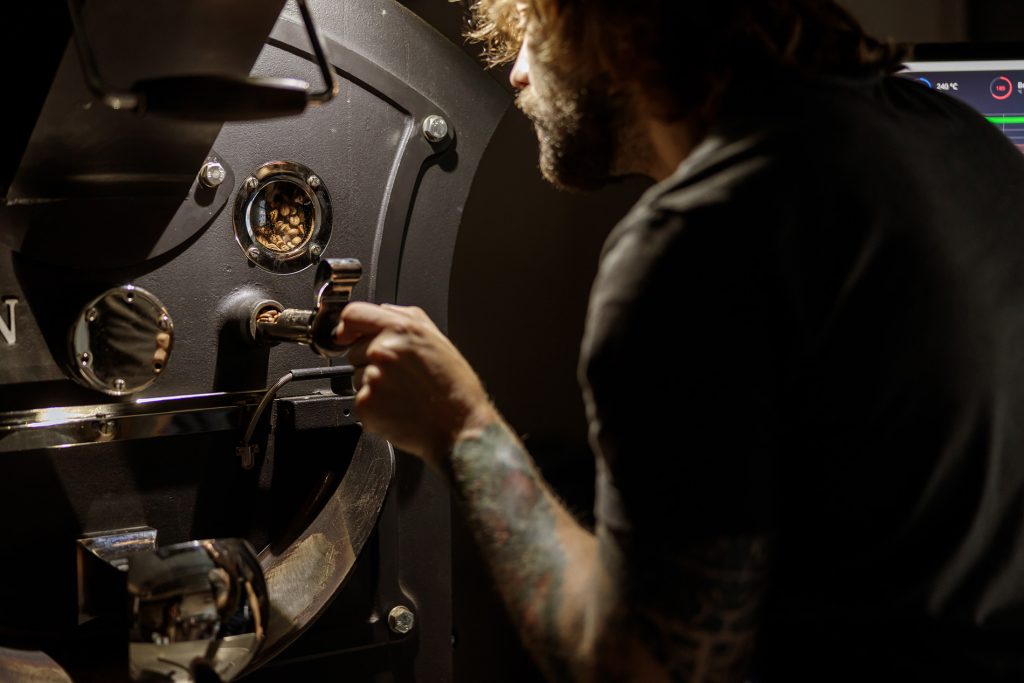
What would the Christmas season be without the aroma of a freshly brewed Christmas coffee blend? From the very first sip, notes of cinnamon, vanilla, and cocoa unfold, evoking memories of candlelight, baked goods, and cozy winter evenings. But these coffees are more than just seasonal beverages – they are small works of art made of aroma, craftsmanship, and emotion. In this article, we discover why Christmas coffee blends taste so unique, how they are made, and why they become a firm ritual each Christmas season.
What makes Christmas coffee blends so special. What is a Christmas coffee blend – and why it's more than just flavored coffee.
A Christmas coffee blend is not a simple combination of beans and spices. It is a finely tuned composition that combines tradition, craftsmanship, and passion. While many flavored coffees use artificial additives, artisanal coffee manufacturers – like us – rely on natural ingredients and precise roasting techniques.
The goal is to preserve the aroma of the beans while harmoniously embedding the festive notes. A good blend should not taste predominantly of spice, but rather highlight the fine nuances of the coffee bean: sweetness, spice, and warmth – perfectly balanced.
Real Christmas coffee tastes of craftsmanship, not flavorings.
The best Christmas coffee blends consist of high-quality Arabica beans that are specially composed for the winter months. This creates a coffee that not only tastes good, but tells stories: of the scent of freshly baked cookies, the sound of a crackling fireplace, and the first sip on a frosty December morning.
How spices like cinnamon, vanilla, cocoa, and gingerbread spice shape the Christmas aroma
The secret to every great Christmas coffee blend lies in the spices. They transform ordinary coffee into a festive taste experience:
Cinnamon brings warmth and depth, reminiscent of advent wreaths and baked apples.
Vanilla provides softness and elegantly rounds off the roasted aromas.
Cocoa emphasizes the chocolate notes of Brazilian beans and adds richness.
Gingerbread spice – with clove, nutmeg, and ginger – provides the unmistakable Christmas character.
In combination with the natural oils of the coffee bean, an aroma is created that is tempting even when ground. This symbiosis of spices and roasting creates what enthusiasts appreciate so much about Christmas coffee: an aromatic profile that unfolds with every sip, without seeming artificial.
You don't taste Christmas – you feel it in the cup.
Why blends for Christmas provide more warmth, coziness, and enjoyment
A coffee for summer should be refreshing – a coffee for winter should warm you up. And that's exactly what Christmas coffee blends do. They provide inner peace, offer security, and accompany us through the quietest days of the year.
The high proportion of mild Arabica beans, paired with a gentle medium roast, ensures a fine, rounded taste that is not intrusive but enveloping. The body is full-bodied, the texture creamy – especially when the coffee is prepared with milk, milk foam, or a hint of whipped cream.
Many of our customers describe the moment like this:
"It's like drinking Christmas – sweet, warm, and somehow peaceful."
This coziness in the cup is no coincidence, but the result of artisanal precision and sensory balance. Because in a time when everything is getting faster, a cup of Christmas coffee stands for the opposite: deceleration.
Sensuality in the cup – how Christmas coffee awakens emotions with every sip
Coffee can do many things – but Christmas coffee can touch you. The first scent, the gentle rising of the steam, the creamy taste on the tongue – all of this awakens memories of childhood, family, and security.
The combination of cinnamon, vanilla, and cocoa acts like an emotional anchor. It reminds of familiar moments: baking gingerbread, unwrapping presents, the quiet crackling of the fireplace. This sensual component is what makes Christmas coffee blends so unique.
In our coffee roastery, we ensure that every batch carries the same emotional fingerprint – gentle, aromatic, festive, and authentic. Because a good Christmas coffee is not just a drink. It is a feeling – packaged in 250 grams of pure coziness.
Christmas coffee blends are more than seasonal products. They are the epitome of aroma, feeling, and craftsmanship – a symbol of enjoyment, quality, and the magic of Christmas in a cup.
The Art of Blending – How Christmas Coffee is Created
The secret to every great Christmas coffee blend does not lie in a single spice or ingredient – but in balance. Only when bean, roast, and aroma are perfectly coordinated does that unmistakably fine, harmonious taste emerge that makes coffee during the Christmas season a true experience.
In our coffee roastery, coffee blending is a process that combines precision, experience, and passion. Because a good Christmas coffee is not created by chance – it is composed, like a musician writing their melody.
The Selection of Beans – Why Origin, Varietal, and Processing Are Crucial
The foundation of a successful blend is always the bean. Its origin, varietal, and the type of processing determine how the taste will develop later. For a festive blend, harmony is paramount – each component should show its character, but not dominate.
Origin: Each region brings its own sensory strengths. Brazil provides body and sweetness, Colombia brings structure and fruitiness, Guatemala depth and spice.
Varietal: Whether Yellow Bourbon, Typica, or Caturra – each variety carries its own aroma profile.
Processing: Whether washed, honey processed, or pulped natural – the method influences how much sweetness, fruit, or spice arrives in the cup.
A Christmas coffee is like an orchestra: the beans are the instruments – music is only created when they play together.
Especially during the Christmas season, we look for richness and warmth. That's why we rely on Arabica beans that are mild, balanced, and fine in the finish. They form the ideal base for elegantly incorporating wintery aromas like cinnamon, vanilla, or cocoa.
Brazil, Colombia, and Guatemala – the Trio for Harmonious Christmas Coffee Blends
The best Christmas coffee blends consist of a perfectly balanced blend from these three countries of origin:
Brazil – Minas Gerais:Gentle Yellow Bourbon beans, pulped natural processed, provide milk chocolate notes, soft body, and subtle nuttiness.
Colombia – Medellín:The varieties Typica, Bourbon, Caturra, and Catuaí, washed processed, contribute plum jam aromas and a delicate, lively acidity.
Guatemala – New Oriente:Yellow Bourbon from the farm El Gigante, honey processed, adds subtle gingerbread notes – with a hint of cinnamon and vanilla in the aftertaste.
These three countries of origin are the backbone of our festive blends. They complement each other:
Brazil provides body and warmth,
Colombia brings elegance and fruit,
Guatemala adds depth and spice.
The result is a Christmas coffee blend that is balanced, harmonious, and festive in both aroma and taste – like a winter stroll in liquid form.
How Roasting Time and Temperature Control the Taste Between Delicate and Full-Bodied
The roasting is the moment when the bean unfolds its full potential. Even the smallest differences in duration or temperature change the result. For our Christmas coffee, we choose a medium roast – the ideal compromise between sweetness, body, and aroma.
Light Roast: emphasizes acidity and fruitiness – less suitable for festive blends.
Medium Roast: brings balance, sweetness, and fine roasted aromas – ideal for milk chocolate, plum butter, and gingerbread notes.
Dark Roast: intense and strong, but risks masking delicate spice nuances.
In drum roasting, our beans are slowly refined at 190–205 °C – for about 14–16 minutes. This long-term roasting ensures even development, dissolves bitter substances, and highlights natural sweetness.
"Good roasting is like slow cooking – it requires time, patience, and feeling."
This creates an aroma that is fine, complex, and at the same time full-bodied – the perfect base for a festive blend that can be prepared in various ways: whether espresso, hand filter, or French Press.
Mixing like a roaster: How to create a festive blend that combines aroma and balance
The actual coffee blending is the high art. It is the moment when all components unite – every bean, every roast, and every spice note finds its place.
The process:
Roast individually: Each origin is roasted separately to preserve its individual aroma profile.
Cooling and resting period: The beans "breathe" for at least 24 hours so that the aroma stabilizes.
Blend: Only then are they combined in precise proportions – for our Christmas Coffee, for example, 40% Brazil, 40% Colombia, 20% Guatemala.
Test brewing: Each batch is tasted until balance, body, and fragrance harmonize perfectly.
This artisanal approach differentiates us from industrial ready-made blends, where beans are mass-roasted and artificially flavored. Our blends, on the other hand, are created from experience, sensory perception, and intuition – a symphony of bean, roast, and aroma.
The goal of every festive blend is not to be loud – but to sound perfectly balanced.
This is the true art of blending: to create a coffee from three continents, five varieties, and countless nuances that tastes fine, harmonious, and simply like Christmas.
The art of blending a Christmas coffee is the art of balance. Between bean and spice, sweetness and fullness, roast and aroma. Those who master it create not just coffee – but moments of enjoyment that bring festive cheer to life in every cup.
You can order our Christmas coffee every year during the Christmas season here.
Christmas Coffee 2025
€14,00
Includes 7% VAT.
(€56,00 / kg)
plus shipping
Delivery time: immediately available
Comparing the most popular Christmas coffee blends
The world of Christmas coffee blends is as diverse as the Christmas season itself: from classic chocolatey aromas to creative blends with amaretto to finely spiced compositions with cinnamon, vanilla, and gingerbread flavor. Each festive blend tells its own story – and each has its place in this special time of year.
Whether you prefer it strong and spicy or mild and creamy – here you'll find out which blend suits your taste and how to recognize quality.
Classic, creative, or aromatic – which Christmas coffee blend suits you?
Christmas coffee is not just any Christmas coffee. The art lies in finding the right blend – tailored to your preferences, your preparation method, and your mood.
1. Classic – Timeless enjoymentChocolate, cinnamon, vanilla, and a hint of cocoa form the heart of classic Christmas coffees. These blends are round, harmonious, and taste excellent in espresso, hand filter, or French Press. Ideal for those who appreciate tradition and warmth.
2. Creative – The modern interpretationHere, winter spices meet refined ideas: light amaretto notes, sweet vanilla sugar, sometimes even caramel or orange zest. These blends surprise with lively accents and are perfect for cappuccino or latte lovers who enjoy their drink with milk foam.
3. Aromatic – The sensory journey of discoveryThis variation combines intense body with fine spice: clove, ginger, and gingerbread spice provide depth and a long, elegant sweetness. They are the ideal choice for connoisseurs seeking complexity and variety.
Tip: If you are trying Christmas coffee for the first time, start with a classic. This way, you'll recognize which direction – sweet, spicy, or fruity – suits you best.
Christmas Coffee 2025 – our festive blend with milk chocolate, plum butter, and gingerbread
Our Christmas Coffee 2025 is the centerpiece of our seasonal blends – a festive blend that unites the best from three countries: Brazil, Colombia, and Guatemala.
Flavor profile: Milk chocolate, plum butter, and gingerbread – velvety, rounded, and typically Christmassy.
Roast: Medium roast, developed to achieve a harmonious result in espresso, filter, and French Press.
Texture: Soft, creamy, and full-bodied with subtle sweetness.
Special feature: 100% Arabica, hand-roasted in small batches – with love, experience, and passion.
This blend embodies the epitome of enjoyment, warmth, and coziness. Even the scent is reminiscent of freshly baked cookies – and the taste seduces with chocolate depth, fruity sweetness, and spice notes reminiscent of gingerbread.
"Our Christmas Coffee 2025 is not just a coffee you drink – it's a moment you experience."
You can order our Christmas coffee every year during the Christmas season here.
Christmas Coffee 2025
€14,00
Includes 7% VAT.
(€56,00 / kg)
plus shipping
Delivery time: immediately available
Classic Christmas coffees vs. modern variations with amaretto or vanilla sugar
Traditional Christmas coffee blends focus on natural flavors: cinnamon, vanilla, cocoa, and gingerbread spice. They rely on craftsmanship, not artificial flavoring.Modern variations, on the other hand, play with new impulses – such as amaretto, caramel, orange peel, or vanilla sugar – and offer a creative addition to classic flavor profiles.
Blend Type
Flavors
Recommended for
Advantage
Typical Moment of Enjoyment
Classic
Cinnamon, vanilla, cocoa, gingerbread
Filter, French Press, espresso
Timeless, warm, round
Breakfast, Advent Sunday
Modern
Amaretto, vanilla sugar, chocolate
Cappuccino, latte, espresso
Playful, sweetish, festive
Afternoon coffee, dessert
Spicy
Clove, ginger, gingerbread spice
French Press, portafilter
Intense, aromatic, strong
Evening indulgence
The difference lies in the character: while classic blends impress with depth and naturalness, modern blends aim to surprise – without seeming artificial. The best ones manage the balancing act between tradition and innovation.
Why high-quality roasts from a coffee roastery are better than ready-made supermarket blends
Industrial ready-made blends often use inferior green beans that are "refined" with artificial flavors. The result: a short-lived aroma but a flat taste.
In a coffee roastery, on the other hand, each bean is treated individually:
Roasting: slow, gentle, temperature-controlled – for maximum aroma development.
Blending: only after roasting, so that each bean contributes its full profile.
Ingredients: natural spices, never artificial additives.
You can taste this care in every sip. The coffee tastes fine, complex, and balanced – without bitterness. In addition, artisanal blends are usually sustainable, more transparent in their origin, and freshly roasted.
A Christmas coffee from the roastery is like a handmade gift – it carries personality, time, and passion.
How coffee with spices like cinnamon, cocoa, and clove unfolds its full aroma
For a Christmas coffee blend to develop its best aroma, it needs the right balance between bean, spice, and roast.
Cinnamon brings warmth and depth, but too much can make it bitter.
Cocoa enhances the chocolatey undertones – ideal for Brazilian beans.
Clove adds spice, but only in nuances, so as not to dominate the coffee.
The key is for the spices to support the natural aroma, not overpower it. Through the gentle medium roast, these components merge into a whole – smooth, festive, and aromatic.
A well-balanced Christmas coffee should always have a pleasantly sweet finish, never sharp or sour. Only then does it create the feeling we all seek: Christmas in a cup.
Whether classic, creative, or modern – good Christmas coffee blends have one thing in common: they combine quality, craftsmanship, and emotion. The best ones are not only aromatic and festive, but also honest. And that is exactly what makes them an experience that lasts – cup after cup.
Preparation of Christmas Coffee Blends – How they unfold their full aroma
A festive Christmas coffee only unfolds its full aroma when it is properly prepared. The combination of temperature, grind size and brewing time determines whether the blend tastes harmonious, fine and balanced – or bitter and flat. Whether pour-over or espresso: each method brings out a different facet of the festive blend.
How to prepare Christmas coffee correctly – from pour-over to French Press
For our Christmas Coffee 2025 we recommend preparation using the Hario V60 pour-over filter or as a double shot espresso. Both methods emphasize different aromas – in the filter, the fruity and chocolatey notes are particularly clear, while in the espresso, the sweetness and spicy body come to the fore.
You can order our Christmas coffee every year during the Christmas season here.
Christmas Coffee 2025
€14,00
Includes 7% VAT.
(€56,00 / kg)
plus shipping
Delivery time: immediately available
Milk chocolate, plum jam, gingerbreadThis product has multiple variations. Options can be selected on the product page
Our brewing recipe for the Hario V60 H
pour-over filter
(For fine, clear aromas of milk chocolate, plum jam, and gingerbread)
Filter size: 02
Coffee grounds: 20 g (medium grind, pour-over)
Water: 300 g at 93–95 °C
Preparation:
Pour 50 g of water and let it bloom for 30 seconds.
Second pour: another 50 g of water, wait another 30 seconds.
Pour the remaining water (200 g) evenly over 20–30 seconds.
Total brewing time: 2:30 – 2:45 minutes.
Serving temperature: 50–55 °C – this is how sweetness, spice, and balance unfold optimally.
Tip: Pour in circular motions and ensure even extraction – this keeps your Christmas coffee fine, clear, and aromatic.
Perfect preparation for espresso – strong, aromatic, balanced
Those who love the intense notes of milk chocolate and gingerbread will best enjoy our festive blend as a double shot espresso. This method emphasizes body, depth, and sweetness.
Our brewing recipe for a double shot
Coffee quantity: 19 g in / 40 g out
Water temperature: 93–94 °C
Extraction time: 27–30 seconds
Goal: creamy texture, soft sweetness, fine aroma without bitterness.
If the espresso runs too long, simply grind it a bit coarser – that immediately brings balance to taste and texture.
Milk or alternatives – how to make the perfect cappuccino for Christmas
For milk beverages, we recommend 3.5–3.8% fresh whole milk – it ensures creamy milk foam and supports the fine aromas of the coffee.Of course, you can also use alternatives:
Oat milk: mild, slightly sweet, harmonizes perfectly with vanilla and cinnamon notes.
Soy milk: nutty and creamy – enhances the body.
Almond milk: aromatic and light, emphasizes fruity nuances.
Rice milk or grain milk: sweeter taste, less foam, but pleasantly smooth.
Our tip: Try different types of milk – each slightly alters the aroma and brings out new facets of the Christmas coffee blend.
Recipe for a festive indulgence with milk foam, vanilla sugar and a hint of Amaretto
A favorite recipe from our roastery – ideal for cold evenings:
Ingredients:
1 cup freshly brewed Christmas Coffee 2025
100 ml milk or plant-based alternative (foamed)
1 tsp vanilla sugar
1 tsp Amaretto
Pinch of cinnamon or cocoa for decoration
Preparation:
Pour the hot Christmas coffee into a preheated cup.
Stir in vanilla sugar.
Carefully pour on the milk foam.
Add Amaretto and sprinkle with cinnamon or cocoa.
Serve at about 55 °C – this brings out the fine aromas perfectly.
A recipe that smells of Christmas – soft, sweet, and seductive.
Avoid mistakes: How to keep coffee fine, aromatic, and not bitter
Even the best blend can lose its luster due to small mistakes. To ensure your coffee always impresses, pay attention to the following:
Do not brew too hot: above 95 °C destroys fine aromas.
Do not grind too fine (except for espresso): prevents over-extraction.
Do not extract too long: otherwise, the coffee will become bitter.
Preheat cups: prevents temperature shock and aroma loss.
Always grind fresh: pre-ground coffee loses its aroma within minutes.
Coffee rewards patience – those who prepare it slowly experience a true taste sensation.
Perfect preparation is the secret behind every great Christmas coffee blend. Whether in a pour-over filter or as an espresso – if you pay attention to temperature, grind, and time, you'll create a coffee that tastes fine, aromatic, and festive. This way, every cup becomes a little piece of Christmas.
Mixing Your Own Christmas Coffee – Recipes and Creative Ideas for Connoisseurs
Mixing your own coffee is more than a culinary experiment – it's a tribute to the senses. With the right ingredients, a high-quality bean, and a pinch of passion, a festive blend emerges that smells of cinnamon, vanilla, and cocoa, filling every room with Christmas spirit.Once you've experienced how freshly ground beans combine with winter spices, you understand: coffee is more than a drink – it's a feeling of warmth, craftsmanship, and personal expression.
Basic Recipe for Your Own Festive Blend with Cinnamon and Vanilla
For beginners in mixing Christmas coffee, a simple, harmonious basic recipe is recommended. It brings together classic flavors that blend wonderfully with the natural roast aromas of coffee.
Ingredients for 250 g Christmas coffee:
200 g freshly roasted Arabica beans (mild, medium roast – e.g., Brazil or Colombia)
1 small vanilla bean or 1 tsp vanilla powder
1 tsp ground cinnamon (Ceylon cinnamon for subtle sweetness)
½ tsp cocoa powder (unsweetened, high-quality)
Optional: a pinch of gingerbread spice for festive depth
Preparation:
Freshly grind the beans – medium or coarse, depending on your brewing method.
Mix the spices evenly into the coffee grounds or add them directly to the whole beans in an airtight jar.
Let it rest for at least 24 hours so the aromas can combine.
Tip: Add the vanilla directly to the whole beans and only add the cinnamon shortly before brewing. This preserves a fresh and delicate aroma.
Which Beans and Spices Harmonize Particularly Well
The art of mixing coffee lies in the balance between body, sweetness, and spice. Not every bean goes with every spice – but some combinations are almost magical:
Bean / Origin
Flavor
Compatible Spices
Special Feature
Brazil
Chocolate, nut, sweetish
Cinnamon, cocoa, vanilla
Soft and round – perfect base for Christmas coffee
Colombia
Fruity, gentle acidity
Vanilla, caramel, gingerbread spice
Emphasizes elegance and delicate fruit notes
Guatemala
Spicy, strong, complex
Cinnamon, clove, cocoa
For lovers of intense, spicy blends
Ethiopia
Floral, citrus, fruity
Vanilla, cardamom, cocoa
Ideal for creative, fresh winter coffees
Rule of thumb: Dark roasts harmonize with cinnamon, cocoa, and gingerbread; light roasts with vanilla and fruity accents.
Step-by-Step Guide: Mixing Christmas Coffee Like a Pro
With a little patience, you can develop a festive blend at home that can rival professional blends.
Step 1 – Choose the base:Select two to three beans of different origins (e.g., 50% Brazil, 30% Colombia, 20% Guatemala). This creates depth and complexity.
Step 2 – Dose the spices:Start carefully. Too much cinnamon or vanilla can overpower the coffee's natural aroma. A pinch per 100 g of coffee is often enough.
Step 3 – Mix and let rest:Mix in a jar or aroma-tight container, seal well, and let steep for at least 24 hours.
Step 4 – Taste and adjust:Brew a small amount in a pour-over filter or French press. Note the taste, acidity, and finish. Adjust the amount of spices or bean proportion until the balance is right.
This creates a Christmas coffee that not only tastes good but also bears your personal signature.
DIY Idea: Christmas Coffee as a Gift – with Spices, Label, and Recipe Card
Self-mixed Christmas coffee is an individual gift that expresses personality and appreciation.You only need a few materials:
What you need:
250 g of your own Christmas coffee blend
A pretty jar or a kraft paper bag
A label with a handwritten name ("Festive Blend 2025")
A small card with your recipe and brewing instructions
Optional: a cinnamon stick or vanilla bean for decoration
Tip: Add brewing instructions to the back of your card – for example: "20 g coffee to 300 g water at 93 °C – for 2:30 minutes. Drinking temperature 55 °C."
This makes your gift not only personal but also practical – and guaranteed aromatic.
When Self-Mixing Pays Off – and When Artisanal Blends Are Superior
Mixing your own coffee is fun, offers creative freedom, and hones your sense of aromas. It's especially worthwhile if you want to develop individual flavor profiles or create small gift series.
However, it requires experience:
Small errors in the ratio of bean to ingredient can spoil the aroma.
Not every spice remains stable during brewing.
Consistent roast quality is difficult to achieve when combining different beans.
Therefore:
For everyday enjoyment or the highest quality, artisanal blends from the roastery are the better choice.
Here, roast levels are precisely matched, beans are processed individually, and blends are tasted multiple times – until they achieve the perfect balance between cinnamon, vanilla, cocoa, and natural sweetness.
Whether as a creative gift or a personal ritual – mixing your own coffee is a sensory experience. With high-quality beans, natural ingredients, and a fine sense of balance, Christmas coffee blends emerge that are fragrant, warming, and enchanting – exactly how Christmas should taste.
Christmas Coffee Blends and Their Aromatic Diversity
A good Christmas coffee is like a fragrance in liquid form: it tells stories, awakens memories, and creates moods. Every Christmas coffee blend thrives on its aroma – the fine composition of bean, roast, and ingredient, which together form the festive taste experience. From cinnamon and vanilla to cocoa and gingerbread – the aromatic diversity of these festive coffees is as complex as Advent itself.
You can order our Christmas coffee here every year during the Christmas season.
Christmas Coffee 2025
€14,00
Includes 7% VAT.
(€56,00 / kg)
plus shipping
Delivery time: immediately available
Milk chocolate, plum jam, gingerbreadThis product has multiple variants. Options can be chosen on the product page.
How Aroma is Created – The Interplay of Bean, Roast, and Ingredient
The aroma of coffee is not coincidental. It is the result of a precise interplay of nature, craftsmanship, and experience.
The Bean: Each origin brings its own characteristics – Brazilian beans lend sweet chocolate notes, Colombian beans provide fruity depth, and Guatemalan beans offer spice and body.
The Roast: It determines which aromas are emphasized. A medium roast is ideal for highlighting delicate spice nuances and natural sweetness without creating bitterness.
The Ingredients: Cinnamon, vanilla, cocoa and gingerbread spice act like a perfumer's spices – they highlight, refine, and combine the natural aroma components of the bean.
A perfectly balanced Christmas coffee smells before you taste it – and tastes before you describe it.
The influence of cinnamon, vanilla, cocoa and gingerbread spice on the taste
These spices are the soul of Christmas coffee. They not only define the taste, but also the feeling you get with the first sip: warmth, comfort, anticipation.
Ingredient
Aroma effect in coffee
Recommended use
Cinnamon
Provides soft spice and winter depth.
In small amounts, otherwise it dominates.
Vanilla
Rounds off sharp notes and adds mild sweetness.
Ideal in combination with latte.
Cocoa
Emphasizes chocolate undertones and adds richness.
Perfect for medium to dark roasts.
Gingerbread spice
Adds complexity – notes of clove, ginger and nutmeg.
Especially festive in combination with cinnamon and vanilla.
These spices complement the natural aroma of coffee, rather than masking it. In a festive blend like our Christmas Coffee 2025 they merge into a soft, aromatic overall impression that lingers on the palate – sweet, delicate and unmistakably Christmasy.
How milk, milk foam or whipped cream harmoniously round off the aroma
Milk is not only a companion, but an enhancer of the aroma. It influences how coffee is perceived – both sensually and emotionally.
Milk: softens acidity, emphasizes sweetness and makes spice notes like cinnamon and vanilla appear softer.
Milk foam: adds texture – the coffee appears creamier, the aroma rounder and fuller-bodied.
Whipped cream: gives the coffee a dessert character, especially in combination with cocoa or gingerbread.
Our tip: If you want to experiment, you can try plant-based milks. Oat milk highlights vanilla notes, almond milk emphasizes nuttiness, and soy milk adds subtle caramel notes.
This creates a new dimension of taste – a bridge between coffee and dessert, between craftsmanship and moments of indulgence.
Sensory Analysis: Sweetness, Spice and Body in Perfect Balance
A balanced Christmas coffee follows the three pillars of sensory perception:
Sweetness – mostly from the natural fruit of the bean or gentle vanilla.
Spice – through cinnamon, cocoa and gingerbread spice.
Body – determined by origin and roast.
Ideally, these elements are equally represented without overpowering each other. The first sip is delicate and harmonious, the second reveals depth and complexity, and the aftertaste remains warm and spicy for a long time.
When a coffee says more than a hundred words, its sensory balance is perfect.
Why Christmas coffee remains aromatic yet delicate – the art of balance
The biggest challenge in creating a Christmas coffee blend lies in the balance. Too much cinnamon – and the coffee tastes like pastry. Too much cocoa – and it loses its lightness. Too little vanilla – and the warmth is missing.
The art lies in remaining delicate :
The bean provides the base note (sweetness, body, depth).
The roast brings harmony and structure.
The spices set the accents, but never the tone.
Thus, the coffee remains aromatic without appearing heavy. Each cup tells a story of craftsmanship, patience, and attention to detail.
A good Christmas coffee is like a song in a major key – warm, round and full of light.
The true fascination of Christmas coffee blends lies in their aromatic diversity – in the interplay of bean, roast, and spice that seduces anew each year. Between cinnamon and vanilla, cocoa and gingerbread , an aromatic work of art emerges that remains delicate, sensual, and deeply festive – this is what Christmas tastes like at its finest.
Sustainability & Quality – how to recognize good Christmas coffee blends
In an age where coffee is available everywhere, quality becomes a real differentiator. Especially with Christmas coffee blends, which should shine through their ingredients, their roast and their festive aroma , it becomes clear: True enjoyment only arises when it is combined with responsibility and craftsmanship.A good coffee manufacturer is characterized by the fact that it not only pays attention to taste – but also to origin, sustainability and transparency.
What makes a high-quality Christmas coffee?
A high-quality Christmas coffee is a complete work of art – the result of many careful decisions:
Bean quality: Only fully ripe, hand-picked Arabica beans that are single origin and flawless.
Roasting: Slow, gentle and spot-on – this reduces bitterness and emphasizes sweetness.
Ingredients: Natural spices such as cinnamon, vanilla or cocoa, no artificial flavors.
Aroma balance: Harmonious, delicate, balanced – each component complements the other.
Freshness: Small batches, directly from the roastery, not mass-produced.
You recognize good Christmas coffee not by the label, but by the aroma that unfolds as soon as you open the bag.
Such a coffee not only tastes festive, but also remains delicate, aromatic and pleasantly round in the finish – without harshness, bitterness or artificial sweetness.
Why our coffee roastery relies on sustainable origins and noble beans
Our philosophy is simple: Origin obliges.We only select beans from partner farms that we know and trust. For us, sustainability means: fair pay, respectful use of resources and long-term relationships with producers.
Brazil (Minas Gerais – Fazenda IP): Carefully cultivated Yellow Bourbon beans, pulped natural processed – for soft chocolate notes.
Colombia (Medellín – Cooperative): Typica, Bourbon and Caturra, washed – for delicate fruit acidity and clarity.
Guatemala (New Oriente – El Gigante): Honey processed Yellow Bourbon – for spicy gingerbread depth.
This combination unites the best of three worlds – quality, character and sustainability.Each bean is roasted with dedication, checked and only then blended when it has reached its optimal aroma profile.
We don't roast beans – we tell stories. Of craftsmanship, origin and passion.
Quality features: from bean to roast to packaging
A look at the details quickly reveals whether you are holding a high-quality Christmas coffee blend in your hand.
1. The bean:
Uniform size, no broken pieces or off-colors.
Matte-glossy surface (for medium roasts) – not oily or burnt.
2. The roast:
No black spots or broken beans.
Gently roasted to preserve natural sweetness and delicate aromas .
3. The aroma:
Complex and natural, never pungent or artificial.
4. The packaging:
Aroma valve for freshness.
Sustainable material (e.g. compostable or recycled).
Indication of roasting and filling date – no vague "best before".
Quality is visible, smellable and tasteable – and it doesn't end with the cup, but begins at the origin.
How to distinguish good from inferior blends when buying online
Especially when buying online, it pays to take a closer look. The following points help to recognize genuine quality:
Transparency: Reputable roasters state origin, varietal, processing method, and roast level.
Roaster, not brand: Small coffee manufacturers roast individually – large brands often industrially.
No flavor bombs: Avoid products with artificial additives or "flavor enhancers."
Read reviews: Customers often praise aroma, freshness, and digestibility – not just packaging or price.
Price-performance: High-quality blends cost more, but every cent goes into quality, not marketing.
If a coffee accurately describes where it comes from and how it was roasted, that's usually half the guarantee of quality.
You can order our Christmas coffee here every year during the Christmas season.
Christmas Coffee 2025€14,00Includes 7% VAT.(€56,00 / kg)plus shippingDelivery time: immediately availableMilk chocolate, plum jam, gingerbreadThis product has multiple variants. Options can be selected on the product page
Enjoyment with Responsibility – Fair Coffee for Festive Seasons
Sustainable coffee is not a trend, but an attitude. Especially during the Christmas season, when consumption is omnipresent, we want to show that enjoyment and responsibility can go hand in hand.
Fair Trade: We pay our partners prices above the world market value.
Gentle Processing: Long-term roasting saves energy and reduces waste.
Sustainable Packaging: Environmentally friendly materials protect flavor – and nature.
Regional Production: From roasting to shipping – everything is done locally at Tegernsee.
A high-quality Christmas coffee is not just a moment of enjoyment, but also a statement: for quality, sustainability, and respect for the product.
Good Christmas coffee blends can be recognized by three things: transparency, craftsmanship, and attitude.When bean, roast and ingredient are selected with responsibility, it creates not just a high-quality coffee, but a true feast for the senses – sustainable, honest, and enjoyable.
Christmas Coffee Blends as a Gift Idea
Sometimes it's the little things that bring great joy – like the aroma of freshly brewed coffee on a frosty winter morning. A lovingly selected Christmas coffee is not just a beverage, but a sensory experience that gives warmth, mindfulness, and enjoyment. Especially in the hectic Advent season, such a gourmet coffee becomes a personal yet festive Christmas gift that touches both heart and senses.
Why Festive Blends Are the Ideal Christmas Gift
A gift should evoke emotions – and that's exactly what Christmas coffee blends do. They smell of coziness, taste of comfort, and stand for genuine moments of indulgence.
That's why they are the perfect Christmas gift:
Timeless & unobtrusive: Coffee is a pleasure that suits everyone – whether young, old, family, or colleague.
Sensory & emotional: The scent of cinnamon, vanilla and gingerbread immediately evokes Christmas memories.
Everyday & elegant at the same time: A good blend looks luxurious without being flashy.
Sustainable & conscious: Unlike short-lived gifts, coffee remains an honest product – with history, origin, and character.
A bag of Christmas coffee is not a consumer item – it is a piece of time that you give.
Gift Ideas with Christmas Coffee, Vanilla Sugar, and Chocolate
Christmas coffee can be wonderfully combined into small, individual gift sets. Just a few ingredients transform a simple present into a culinary experience.
Our most popular ideas:
The Classic Indulgence Set:
1 × 250g pack of Christmas Coffee 2025
1 jar of homemade vanilla sugar
A small bar of fine dark chocolate
Packaged in a rustic wooden box or kraft paper gift wrap.
The "Sweet & Cozy" Set:
250g Christmas coffee blend
1 pinch of cocoa powder or gingerbread spice in a mini tin
1 cinnamon stick and a dried orange slice as decoration
Perfect for cappuccino lovers and sweet tooths.
The Premium Gourmet Gift:
Hand-packed Christmas Coffee 2025
Fine Belgian chocolate or pralines
An elegant mug with engraving or initials
Enclosed: small recipe card for festive coffee drinks.
Tip: A handwritten note with "Enjoy this moment – it's all yours" gives the gift heart and soul.
Christmas Coffee 2025 – stylishly packaged, order online, give as a gift
Our Christmas Coffee 2025 is not only a taste highlight but also a festive eye-catcher.The 250g pack comes in an elegant, Christmas design – optionally as whole beans or freshly ground.
Available online: Simply and conveniently order via our webshop.
Packaging: Sustainable, aroma-sealed, and with elegant gold embossing.
Contents: 100% Arabica from Brazil, Colombia, and Guatemala.
Flavors: Milk chocolate, plum jam, gingerbread – perfect for festive hours.
This coffee is a gift that brings joy with every sip – whether as a small present for an Advent brunch, a little token of appreciation for employees, or an elegant gift for business partners.
Whoever gives this coffee gives not only taste – but also the feeling of Christmas in a cup.
You can order our Christmas coffee here every year during the Christmas season
Christmas Coffee 2025€14,00Includes 7% VAT.(€56,00 / kg)plus shippingDelivery time: immediately availableMilk chocolate, plum jam, gingerbreadThis product has multiple variants. Options can be selected on the product page
How to combine festive blends with winter treats
A Christmas coffee unfolds its magic particularly when served with matching delicacies. Here are some ideas for the perfect combination:
Treat
Recommended Blend
Taste Experience
Gingerbread
Classic Christmas Blend
Enhances cinnamon and clove notes
Dark Chocolate
Christmas Coffee 2025
Highlights milk chocolate & plum jam
Vanilla Crescents
Blend with vanilla & cocoa
Delicate, sweet, harmonious
Baked Apple or Apple Strudel
Creative blend with Amaretto
Fruity-spicy winter aroma
Whipped Cream or Milk Foam
Espresso Blends
Creamy, mild, and festively rounded
Tip: Serve your Christmas coffee at approx. 55 °C – this brings out the cinnamon and chocolate notes best.*
For whom Christmas coffee is the perfect gift – from espresso fan to connoisseur
Christmas coffee blends are versatile – they suit everyone who appreciates good taste.
For espresso lovers: strong, spicy blends with fine crema.
For filter coffee drinkers: mild, aromatic varieties with balanced acidity.
For connoisseurs: festive compositions with vanilla, cinnamon and gingerbread, perfect for cozy afternoons.
For colleagues or business partners: a stylish gift that shows appreciation without being intrusive.
For friends & family: because there's nothing better than shared time over a good cup of coffee.
A Christmas gift that connects – because coffee is more than just a drink: It's a moment of reflection.
Whether as an elegant present, a personal gesture, or a culinary surprise – a Christmas coffee gift always strikes the right chord.It is festive, thoughtful, and full of character – a gourmet coffee that perfectly combines enjoyment and emotion.This makes giving gifts what it should be: a gesture of warmth and genuine joy.
Conclusion – Christmas Coffee Blends that Enchant
The world of Christmas coffee blends is a small, fragrant coffee world full of magic, craftsmanship, and taste. Once you've tried a truly well-composed blend, you immediately understand why these coffees are so enchanting each year. They combine craftsmanship, passion, and natural aromas to create an experience that goes far beyond a regular cup of coffee – a piece of Christmas for all the senses.
Why blends offer more variety than single-origin coffees
Single-origin coffees tell the story of one region – Christmas coffee blends tell several. By combining different beans, complex, multi-layered aromas are created that complement each other and create a distinctive taste experience.
In a good blend, Brazilian sweetness, Colombian fruitiness, and Guatemalan spice meet. The result: a coffee that is fine, aromatic, and at the same time wonderfully festive.
A good blend is like a choir: each bean sings its own note, but harmony is only created together.
While single-origin coffees often focus on a specific characteristic, blends offer balance and depth – perfect for the Christmas season, where variety and enjoyment are key.
How festive blends combine enjoyment and sustainability
In our roastery, it's not just about taste, but also about responsibility. Because true enjoyment should not come at the expense of others.Our festive blends are based on transparent supply chains, fair partnerships, and sustainable cultivation.
Sustainable origin: We know every farm personally – from Fazenda IP in Brazil to El Gigante Farm in Guatemala.
Gentle roasting: Energy-efficient, slow, and with attention to detail – for full aroma without compromise.
Conscious enjoyment: No artificial sugar, no added flavors – only pure, natural ingredients.
Christmas coffee shows that you don't have to give up anything when you enjoy consciously – not taste, not quality, and certainly not responsibility.
Christmas Coffee 2025 – the best choice for festive coffee lovers
Our Christmas Coffee 2025 is more than a product – it is the essence of what we understand by festive coffee enjoyment. This blend impresses with its elegant balance of milk chocolate, plum jam and gingerbread, which unfolds with every sip.
Whether as espresso, in a hand filter or with finely frothed milk – this coffee unfolds its velvety cinnamon aroma and its Christmas aromas in a unique way. It is delicious, balanced and at the same time extraordinary – like a festive moment in liquid form.
Christmas Coffee 2025 is our contribution to the great coffee world of festive coffee specialties – a blend that enchants, inspires and connects.
Conclusion: Aromatic, fine, and festive – that's how Christmas tastes in a cup
Christmas coffee blends are more than just seasonal companions – they are a symbol of mindfulness, craftsmanship, and a culture of enjoyment. They enchant with their depth, tell stories from distant lands, and yet bring the familiar feeling of home into every cup.
When aroma, cinnamon, vanilla and cocoa harmoniously blend, something is created that cannot be described, only experienced – Christmas in its most beautiful form.
A coffee that is fine and aromatic, that warms without overwhelming, and that shows that true quality never needs to be loud.
Thus ends our journey through the world of festive blends – with a cup that impresses with its naturalness, harmony, and character.A coffee that not only tastes good, but enchanted.
You can order our Christmas coffee here every year during the Christmas season.
Christmas Coffee 2025
€14,00
Includes 7% VAT.
(€56,00 / kg)
plus shipping
Delivery time: immediately available